Modern technologies that promote energy efficiency in water supply systems
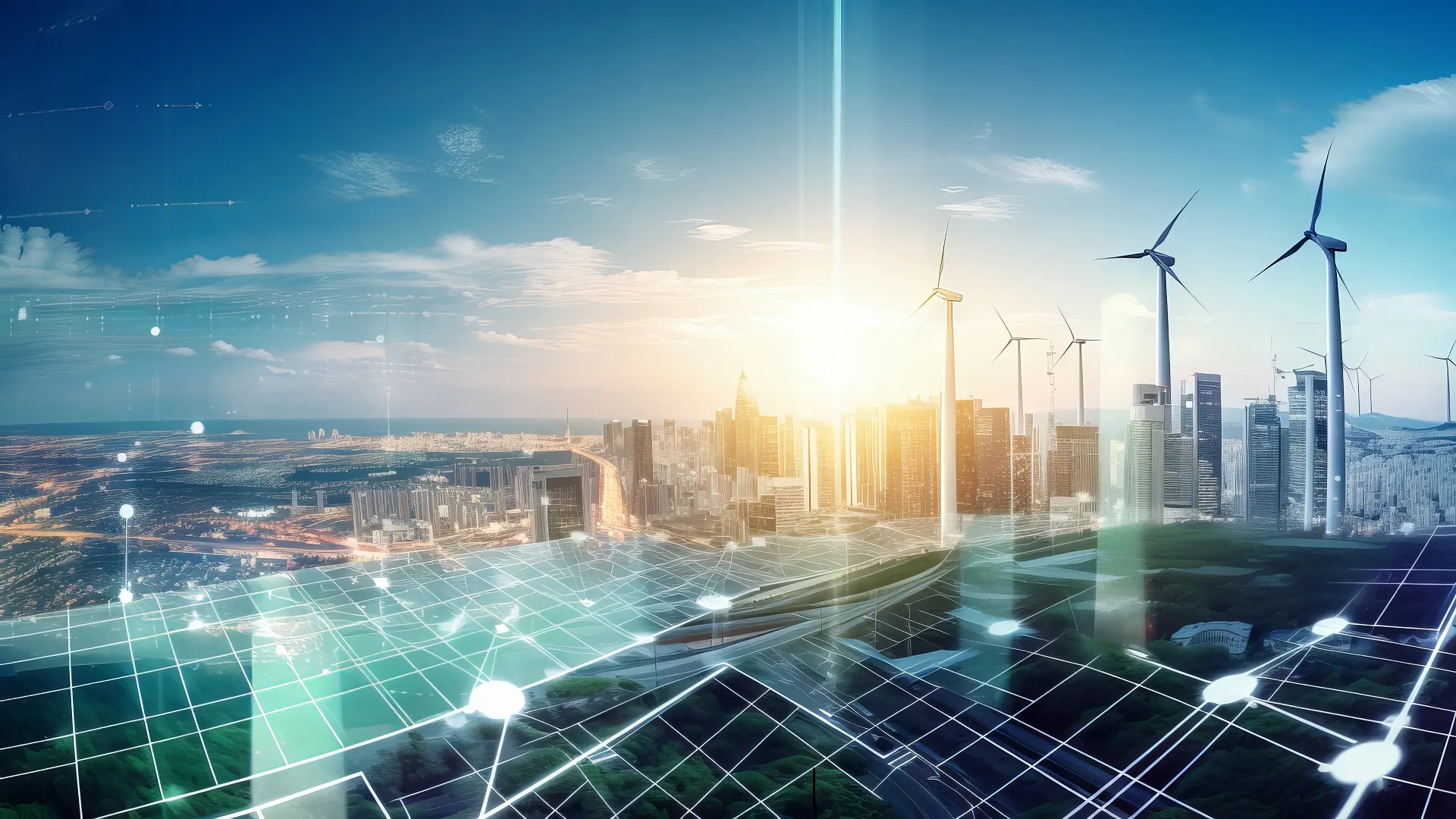
We live in an age where climate change, the decarbonisation of the economy and rising energy prices are transforming every aspect of our civilisation – including what was, until recently, invisible: the water supply network. Although water networks are usually associated with water, they actually consume up to 4% of global electricity production. This unprecedented challenge requires the application of modern digital tools, automation and Renewable Energy Sources to become part of a sustainable, low-carbon energy system.
The energy transition of water supply networks in the digital age
Climate change is intensifying periods of drought and storms, whilst decarbonisation imposes an obligation on companies to reduce CO₂ emissions. Added to this are soaring energy prices and pressure on infrastructure efficiency. Water utilities, though unnoticed in everyday life, account for between 3% and 4% of global electricity consumption – mainly for pumps and water treatment plants. Traditional models based on centralised, fuel-intensive power stations are slowly giving way to systems based on RES, microgrids and local energy storage.
At the same time, the utilities sector is becoming the digital equivalent of industry – thanks to automation, cloud-based data analyses and digital twin technology for water networks, operators can remotely monitor every metre of pipeline, optimise pump operation and minimise water losses.
How technology is transforming water management
The implementation of solutions based on Big Data, artificial intelligence (AI) and the Internet of Things (IoT) enables water and wastewater system operators to collect vast amounts of data from pressure, flow and water quality sensors. Predictive algorithms detect anomalies in pump operation and schedule maintenance, minimising losses, whilst smart pressure-reducing valves optimise pressure across the network. Analyses of this information using artificial intelligence algorithms can reduce energy consumption by up to 30% on a scale that encompasses the entire water supply network.
A digital representation of the network, or ‘digital twin’, enables dynamic adjustment of pump and valve operating parameters. Implementations based on Idrica’s ‘Water Technology Trends 2024’ report show that intelligent real-time monitoring allows leaks to be detected as soon as they occur and reduces repair times by half. Furthermore, the digital twin allows for the simulation of various emergency scenarios and
assess the effectiveness of network management strategies before implementing changes. This enables operators not only to respond more quickly to ongoing incidents, but also to optimise maintenance schedules, leading to a reduction in operating costs and an extended infrastructure lifespan.
Control automation also enables energy consumption to be balanced through integration with RES microgrids – PV panels, wind turbines and biogas plants support water treatment plants in operating emission-free.
Regulations and funds driving the transition
Directive (EU) 2023/1791 of the European Parliament and of the Council, the ‘EED’, introduced binding targets for a reduction in final energy demand of 11.7% by 2030. Consequently, it imposes an obligation on Member States to achieve annual energy savings of 1.9% from 2028 onwards, with priority given to the public sector and vulnerable households.
EU grants play a key role in the modernisation of Polish municipal water utilities, particularly in the areas of digitalisation and energy efficiency of water supply networks. The Recovery and Resilience Facility, a pillar of the NextGenerationEU programme, supports the digital transformation of water and wastewater operators by funding investments in smart monitoring systems, process automation and the implementation of digital twins. At the same time, the Cohesion Funds and the LIFE Programme focus on the modernisation of water treatment plants and distribution networks, enabling the implementation of environmentally friendly solutions such as energy-efficient filtration technologies, water recovery systems and infrastructure that reduces transmission losses.
In Poland, the ‘Cyber-Secure Water Supply’ programme was launched in 2025. This is a government initiative aimed at improving cybersecurity in water utilities in Poland. The programme is being implemented as part of the National Recovery and Resilience Plan and is co-financed by the European Union. The aim of the programme is to protect water supply infrastructure against cyberattacks, including operational technology (OT) systems. The programme is open to water utilities, public utility companies and local government bodies that are covered by the national cybersecurity system.
From technology to implementation – Apator as a partner to local authorities and municipal companies
Apator has been developing solutions for remote meter reading and utility control for years. The Ultrimis series of ultrasonic water meters are devices with no moving parts, resistant to contamination and magnetic interference, operating across the full R800 measuring range. Thanks to electronic communication (NFC, LoRaWAN, Wireless M-Bus) and an IP68 protection rating, they can be installed in any position without the need for additional straight pipe sections.
The high-quality Polish Ultrimis ultrasonic water meter is:
A number of patented design and technological solutions;
Probably the lightest and smallest ultrasonic water meter available on the market;
- Measurement stability regardless of contamination of the measuring system components during operation.
Ultrasonic water meters are used to measure the flow and volume of water at temperatures up to 50°C or 70°C through a closed system with full flow, at a maximum operating pressure of up to 16 bar (PN16), particularly where precise water consumption measurement is required and modern communication technologies are applied, including NFC and a wireless reading system. The water meters feature an electronic display (IP68); they can be installed in any operating position (H; V; H/V) and do not require the use of straight pipe sections U0D0, nor a filter or check valve.
Implementation example – Słupsk Waterworks
Słupsk Waterworks, together with local RES suppliers, established the Słupsk Bioenergy Cluster, integrating a biogas plant, PV farms and a wind turbine. Apator supplied an advanced IT system that collects and visualises data from electricity meters, flow meters and pressure sensors, enabling:
Real-time monitoring of the heating and electricity networks,
Automatic reporting of energy production and CO₂ savings,
Rapid identification of faults and optimisation of the service visit schedule.
As a result of the investment, lower energy costs, security of supply and a tangible increase in the share of RES in the city’s energy mix were achieved.
Conclusions
The waterworks of the future are digital, cost-effective and sustainable systems. Their energy efficiency is not a passing trend, but a necessity, both economically and environmentally. Enabling technologies such as Big Data, AI, IoT and Digital Twins are already available, and the key lies in their implementation and expertise. Poland has local leaders, such as Apator, ready to support local authorities and municipal companies in their digital transformation. Thanks to this, the transformation need not be a matter for the distant future, but can become an everyday reality for local authorities, municipal companies and residents, who will benefit from reliable, affordable and green water services.