1 MW energy storage facility for Słupsk Waterworks
Energy storage as a system component that increases self-consumption and enhances the security of power supply for water supply networks as critical infrastructure.
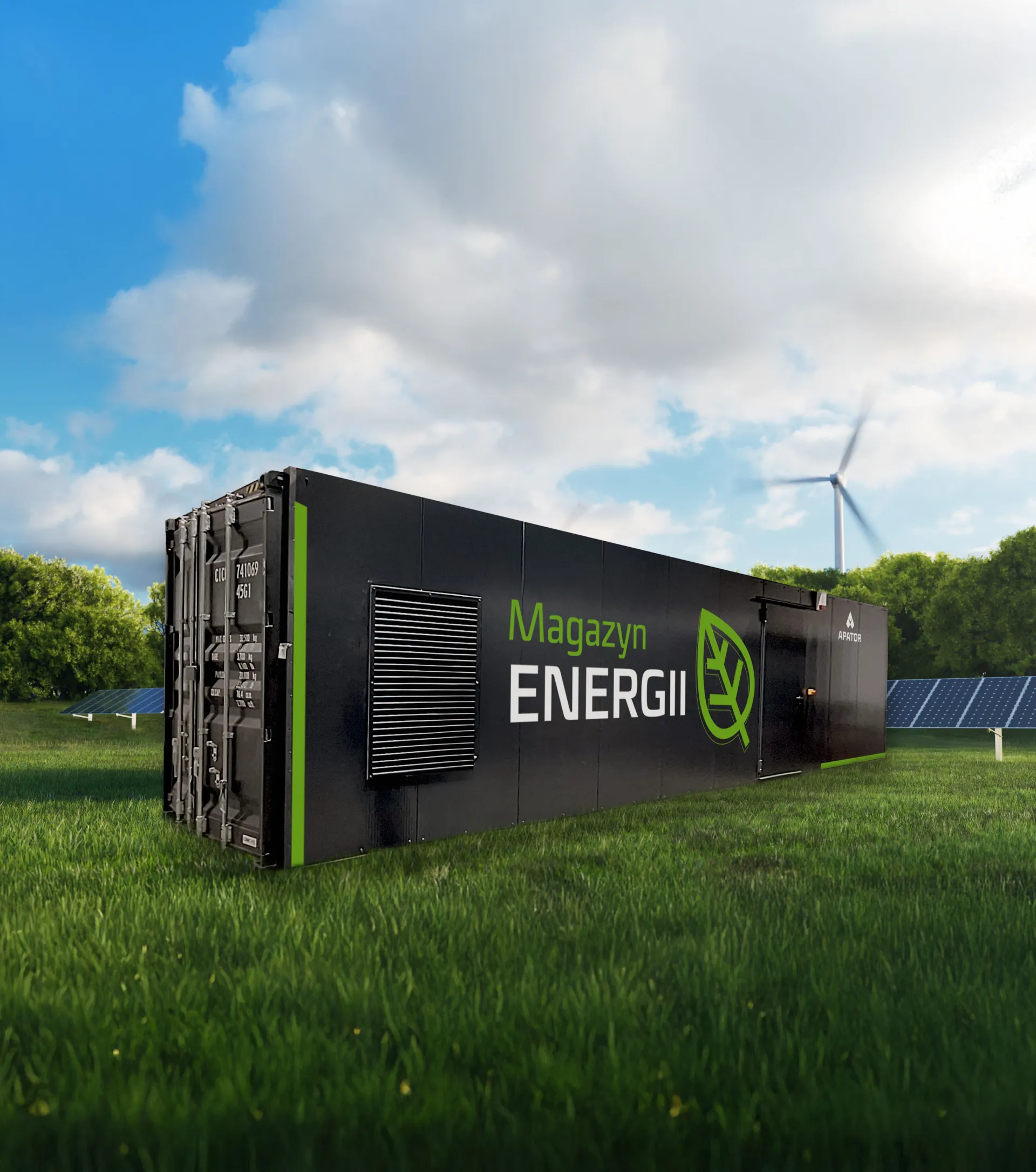
As a leader in the water supply sector, Słupsk Waterworks is enhancing the reliability of its electricity power supply whilst implementing the Energy Cluster development plan based on its own and its partners’ existing assets. The rapid growth of Renewable Energy Sources, rising energy demand, and fluctuations in production and demand patterns are all contributing to the development of such initiatives.
The challenge facing water utilities
The challenge facing water supply systems is to ensure the security of the power supply and maintain a high level of security in the operation of systems (IT/OT). The need to manage various energy carriers and balance them requires the use of energy storage facilities and flexible real-time infrastructure management systems, and data analyses are also crucial.
Activities relating to balancing and managing extensive infrastructure should be rapid and based on decision-making algorithms operating on large volumes of data. Only an EMS-class management system can ensure an appropriate response. In this situation, the operator’s actions alone are insufficient.
Ensuring a high level of process automation is a key step in resolving the challenges arising from the complexity of energy balancing requirements and the operation of water utilities as a key member of the Energy Cluster. Furthermore, data centres and systems for water utilities must meet the highest digital security standards as elements of critical infrastructure, whilst also interfacing directly with the power system.
The application implemented
Apator, as the consortium leader, is carrying out a comprehensive development project in Słupsk in collaboration with MAAT4.
Scope of the project:
• construction of a photovoltaic power plant,
• container transformer stations,
• an energy storage facility to improve energy efficiency,
• access road and outdoor MV, LV, telecommunications and lightning protection installations,
• cable line feeding power into the existing MV switchgear.
The energy storage facility consists of two 40-foot containers:
• one of the containers houses inverters, a transformer and control systems,
• the other serves as a battery module with a gross capacity of 2.48 MWh.
The containers are mounted on a dedicated foundation slab, ensuring stability and resistance to external factors. The technology applied enables full integration with the power grid and operation in island mode – independently of the external power supply.
The storage facility is equipped with:
• an advanced BMS system monitoring cell status and ensuring safety and optimal operation,
• an integrated fire detection and suppression system, detecting minimal chemical changes that may indicate cell overheating and automatically protecting the installation,
• air conditioning and ventilation systems maintaining optimal operating conditions throughout the year,
• an automatic switchover to island mode in the event of a grid failure.
The energy storage facility works in conjunction with an innovative energy management system (Smart Grid), enabling:
• the storage of surplus energy,
• reducing the load on the grid during peak hours,
• implementation of pre-programmed charging and discharging strategies,
• ensuring uninterrupted power supply to the facility.
Cybersecurity
In carrying out the above tasks, certified data concentrators compliant with NC RfG requirements were applied, cybersecure SPV RM and BRG3 controllers, which communicate with the operator’s SCADA systems and with the Integrated Energy Resource Management System – i.e. the SCADA-class system of Słupsk Waterworks – using secure communication protocols employed in the professional energy sector. Additionally, for security enhancement, network segmentation was applied, along with the separation of the operational technology (OT) network from the office IT network.
A local HMI station has been installed in the energy storage container, directly integrated with the ZSZZE system. The operator interface allows users — in accordance with their assigned access levels — to monitor and control the operating parameters of the storage facility, as well as the other components of the installation. The terminal provides access to real-time process data, alarm signals, event history and diagnostic functions, enabling full operational control in local mode.