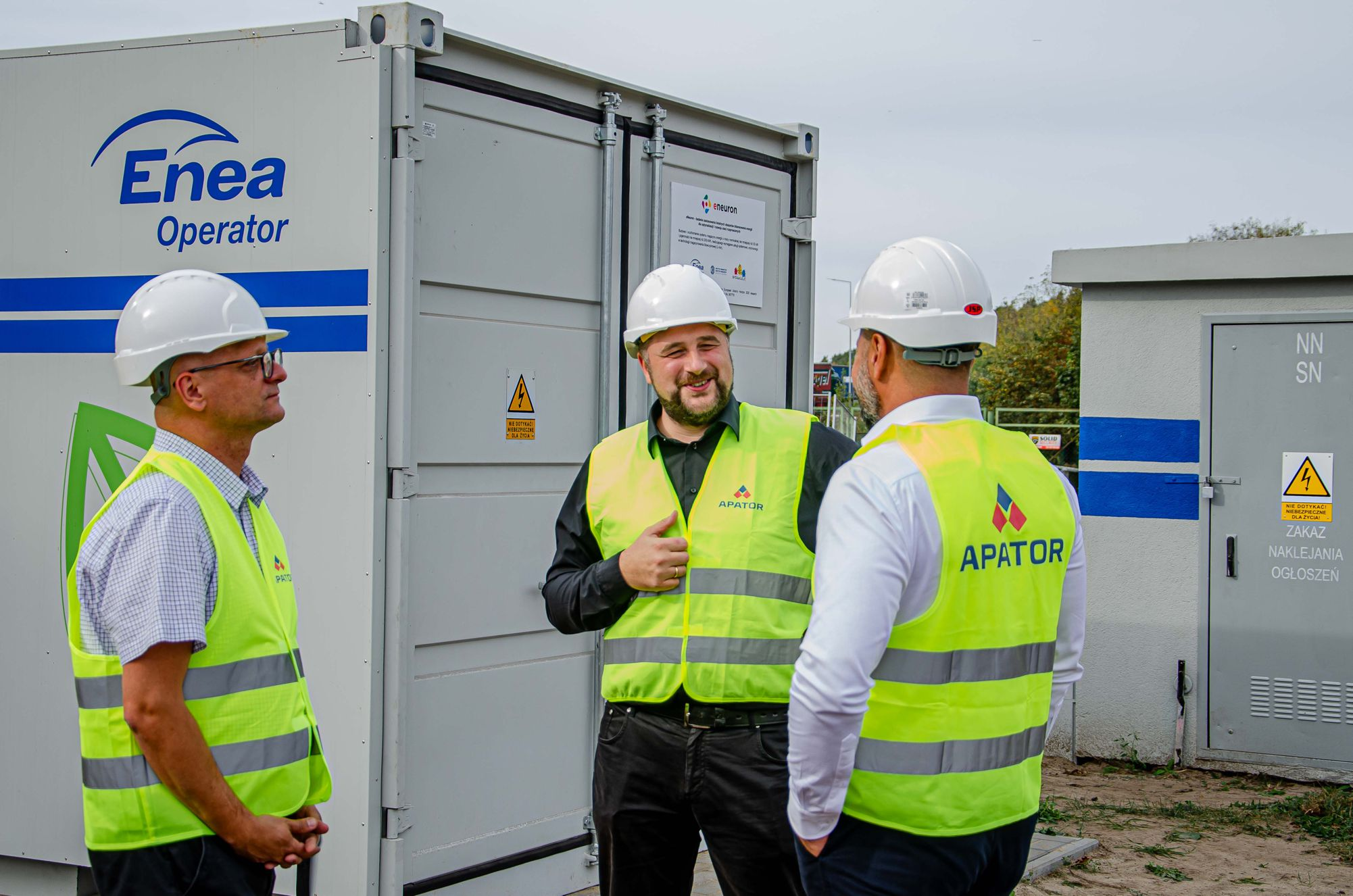
Enea Operator launches a new energy storage facility in the low voltage grid
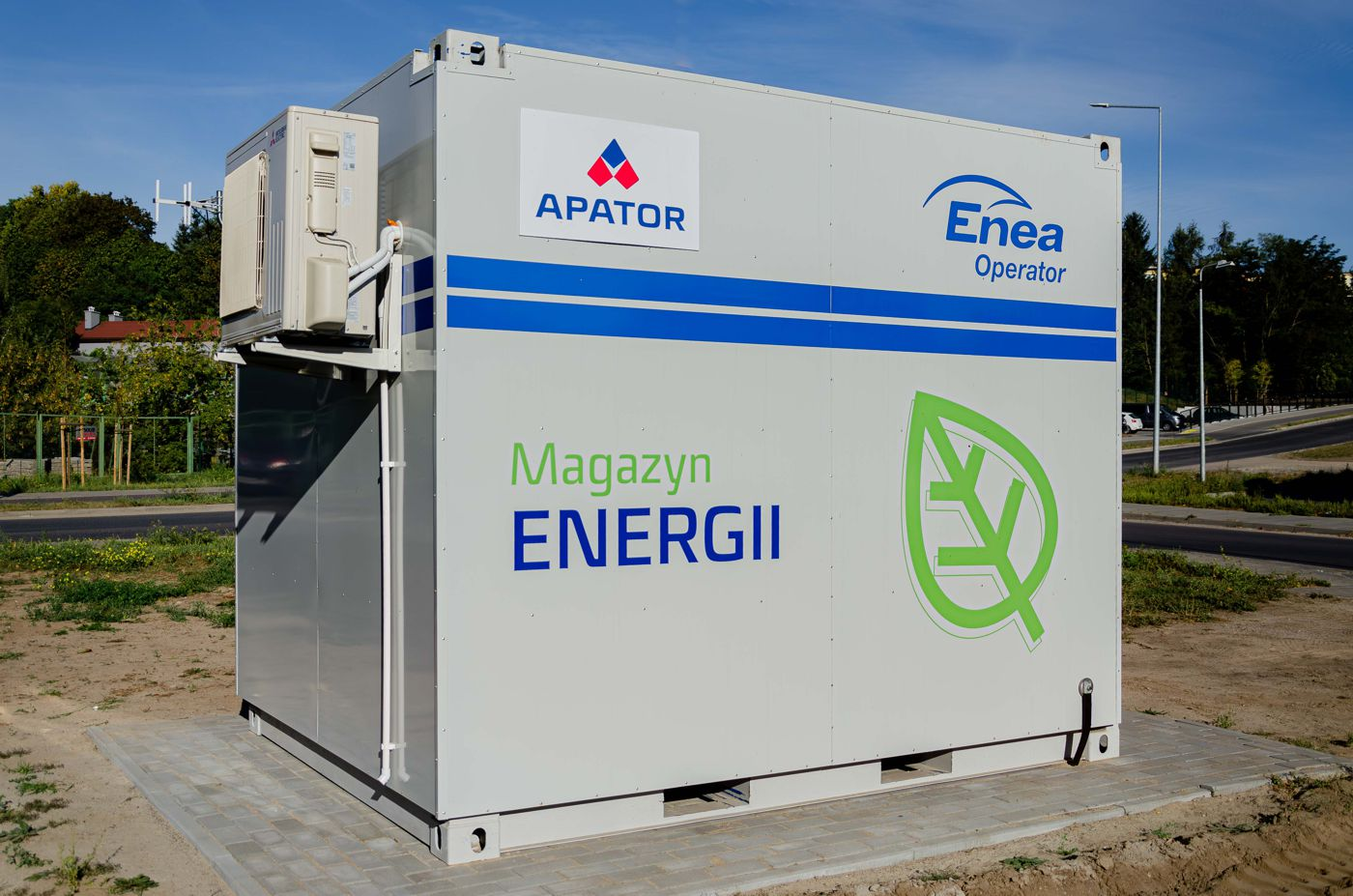
In October 2023, Enea Operator connected an industrial energy storage facility to the low voltage grid in Bydgoszcz. Its purpose is to stabilise the parameters of the electricity grid in areas with a high concentration of Renewable Energy Sources. The project was carried out as part of the international eNeuron project by a consortium of two Polish companies: Apator and NRG Project.
Enea Operator has been participating for three years in the international project “eNeuron: greEN Energy hUbs for local integRated energy cOmmunities optimizatioN”, carried out under the European Horizon 2020 programme. Its aim is to develop innovative tools to optimise the design and operation of local energy systems with optimal integration of distributed, mainly Renewable Energy Sources.
Today, energy storage is no longer a thing of the future but our present reality. The rise in the number of micro-installations poses a technical challenge to the operation of the distribution network. We must realise that, when our network was built, bidirectional flows were not factored into the design. Green energy production depends on external factors, and our goal and duty as a distribution company is to ensure a stable flow of energy around the clock. Energy storage facilities ensure the balancing of electricity demand. Their use is also a good way to improve the efficiency of RES infrastructure. This is because they offer the possibility of storing greater quantities of green energy and utilising it at times of peak demand.
Tasks and services
connected energy storage system
The construction of the energy storage facility in Bydgoszcz was made possible thanks to several years of cooperation between Enea Operator staff and a research team from the University of Zielona Góra on the EnergyStore project. Various energy storage technologies and their performance under specific grid conditions were investigated. As a result, it was decided to build an energy storage facility using lithium-ion (Li-Ion) technology with a nominal power of at least 50 kW and a capacity of at least 200 kWh.
The new energy storage facility performs a number of system services, including reactive power compensation, grid distortion compensation and stabilisation of Renewable Energy Sources. The installation has a two-stage AC/DC/DC converter and a dedicated control algorithm, enabling the battery to be charged for many hours using renewable energy from those phases in which the voltage exceeds the threshold. When evening or night-time demand peaks, the energy storage facility will supply energy to the grid, so as to be ready to store energy from RES during the following day.
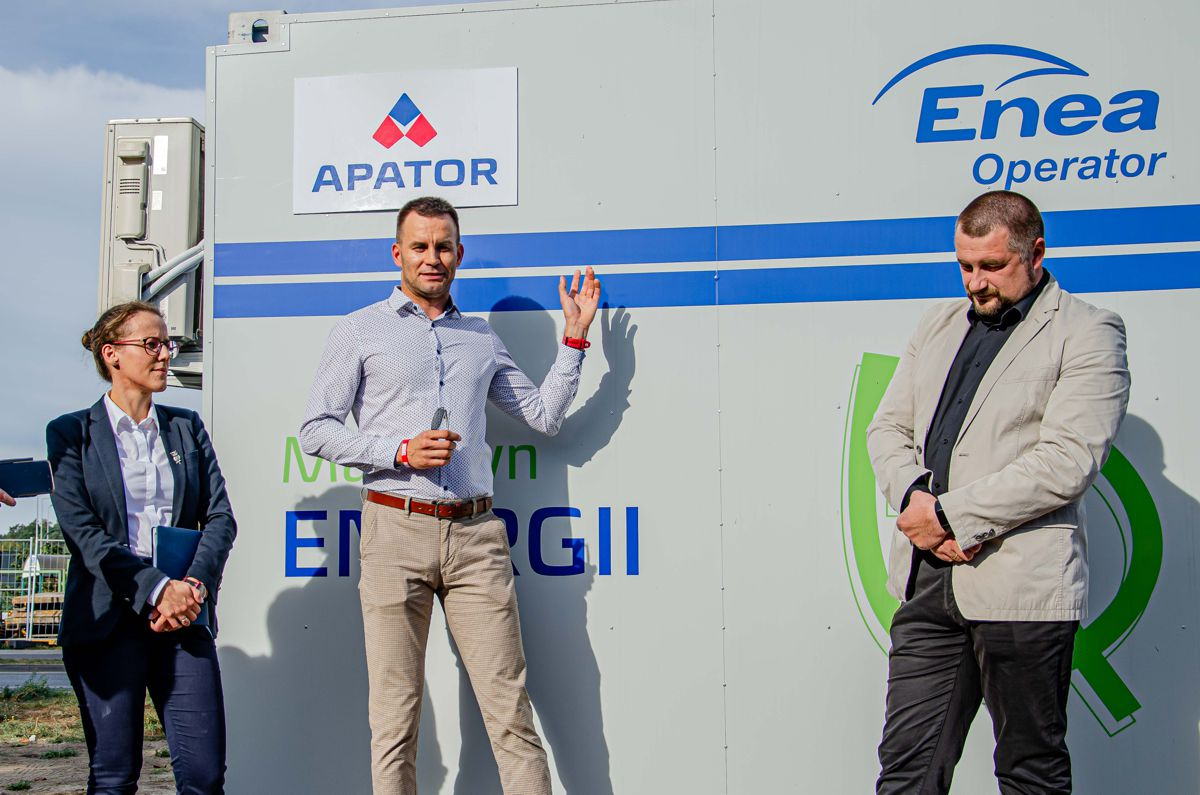
The cooperation between Apator and the network operator Enea Operator opens up new opportunities in the field of energy storage and the more efficient use of energy from RES, contributing to sustainability in the energy sector. This investment represents an important step towards more coherent and efficient energy management, and could serve as a model for other locations. A specially designed energy storage facility, in this case comprising a battery pack and a BMS system supplied by NRG Project, serves as a vital addition to the distribution network, which already hosts numerous generation sources. Its main tasks will be: stabilising the output of the Renewable Energy Source, balancing phase voltages at the grid connection point, stabilising grid parameters and improving power quality.
Energy transition
with energy storage facilities
Energy storage is a key component of the energy transition, driven by the growing availability of Renewable Energy Sources, environmental protection and a modern approach to the development of the energy sector. One of the key users of energy storage systems are Distribution System Operators, whose main task is to manage grid traffic effectively in order to ensure the reliability and continuity of electricity supply within a changing generation mix.