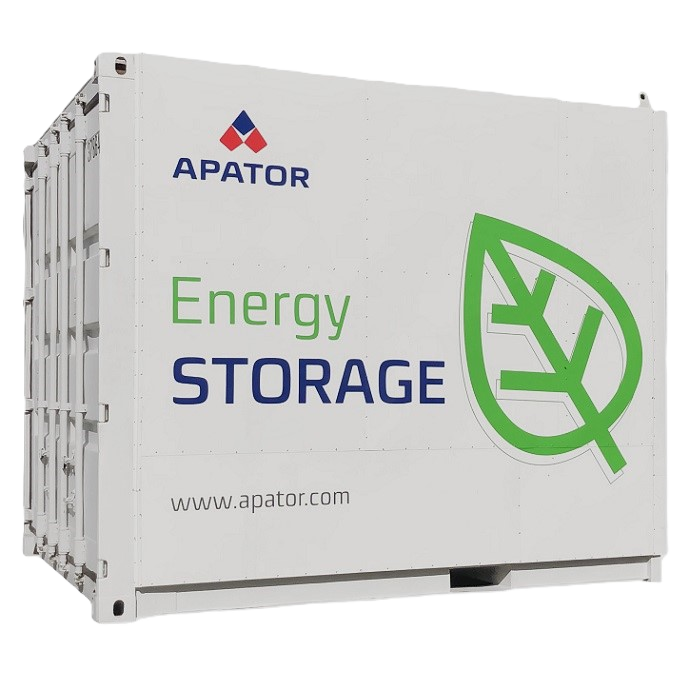
Energy storage for RES installations
Energy production stabilization and energy storage
-
It enables the storage of surplus energy
-
Improves the flexibility of the energy system
-
Supports power balancing
Find out what energy storage has to offer for RES installations
The most natural area of application for energy storage systems is renewable energy installations. Renewable energy is characterised by high variability, depending on the time of day and weather conditions. A stable and effective transition to a model of electricity generation and distribution based on Renewable Energy Sources requires the safe collection and storage of energy.
The solution is an energy storage facility, complete with a dedicated control and supervison system, designed for use in Renewable Energy Sources installations (PV farms and wind turbines).
The purpose of the energy storage system is to accumulate energy during the hours when it is produced by RES and feed it into the grid (sale) during periods of increased demand, as well as to temporarily stabilise generation.
The application of the energy storage system allows for the scaling and stabilisation of energy production from RES, as well as an increase in production without increasing the connection capacity.
The energy storage facility can also provide services related to the stabilisation of the power grid’s operating parameters (voltage stabilisation and symmetrisation, reactive power compensation), which helps to reduce the number of tripping events and downtime in RES installations caused by voltage surges in the grid.
Improved control of RES, easier integration into the electricity grid, and stabilisation of the operation of individual RES-based generation units
Aggregation of renewable energy from sources with different generation profiles (e.g. PV and wind power) and mitigation of undesirable dynamic conditions (cable pooling)
Offsetting surpluses and shortfalls in energy generated by large RES installations (support for local microgrids or national electricity systems, and support for the balancing market)
Improving the cost-effectiveness of the system – storing surplus energy to sell it at the most profitable time, increasing the system’s capacity without increasing the connection capacity
The provision of additional services relating to the stabilisation of the power grid’s parameters
The application of energy storage for RES installations

Energy storage allows surplus energy to be stored during periods of high generation and fed back into the grid when prices are higher or demand is greater (time-shifting). This improves the cost-effectiveness of the installation, reduces the risk of generation reduction and helps to stabilise the source’s output in the short term.

The energy storage system enables an increase in energy production without increasing the grid connection capacity, whilst also reducing constraints on the grid infrastructure. In practice, it allows the system to be expanded in stages and keeps operating parameters within the required limits (e.g. through peak shaving and scenario-based control).

The energy storage system supports local balancing and increases self-consumption, thereby reducing energy costs and improving energy independence. When combined with an EMS system, it enables operation in various modes, the integration of multiple sources (e.g. PV + wind), and better management of energy surpluses and shortfalls (including cable pooling).