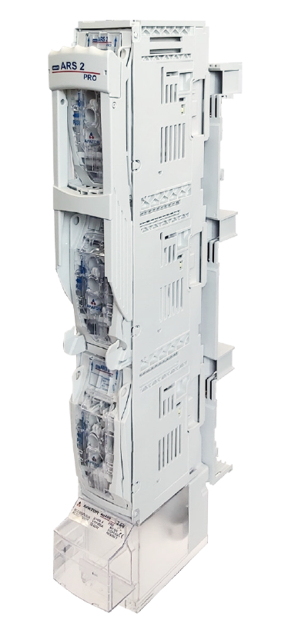
smartARS 2 pro IP20
Vertical fuse switch disconnectors with a hook adapter for IP20 busbar
-
Suitable for fuses of size NH1 (250 A) and NH2 (400 A)
-
A flame-retardant, self-extinguishing plastic with a V0 flammability rating
-
Two-pole contact arrangement
Find out what the smartARS 2 pro IP20 switch disconnector has to offer
The smartARS 2 pro switch disconnector allows you to fit a hook terminal adapter for the installation of switch disconnectors on an IP20 bridge. If the direction of the outlet is changed from the top, the hook and the plate must be rotated by 180° in accordance with the instructions.
Easy installation
Option to change the direction of the drain flow from top to bottom
Designed for installation on 185mm busbar system
Versions
Designations
|
Applications of the smartARS 2 pro IP20 isolating switch

The use of strip-type fuse switch disconnectors in transformer substations ensures the highest standards of operational safety. The design of the switchgear allows for rapid disconnection of the power supply. Furthermore, its resistance to harsh conditions and temperature fluctuations means the equipment does not require frequent servicing, thereby reducing operating costs.

The strip-type fuse switch disconnector is a solution designed to optimise space in LV switchgear. Thanks to its compact design, it facilitates the arrangement of equipment whilst ensuring reliable circuit protection. A well-designed connection system allows cables to be neatly and safely routed, which speeds up installation and makes future inspections easier.

The strip-type fuse switch disconnector ensures effective circuit isolation, thereby enhancing staff safety during operational work. Furthermore, the device minimises the risk of phase-to-phase short circuits, and its design guarantees the stability of the network parameters.