Electricity metering, water metering and gas metering – challenges and the future of the market
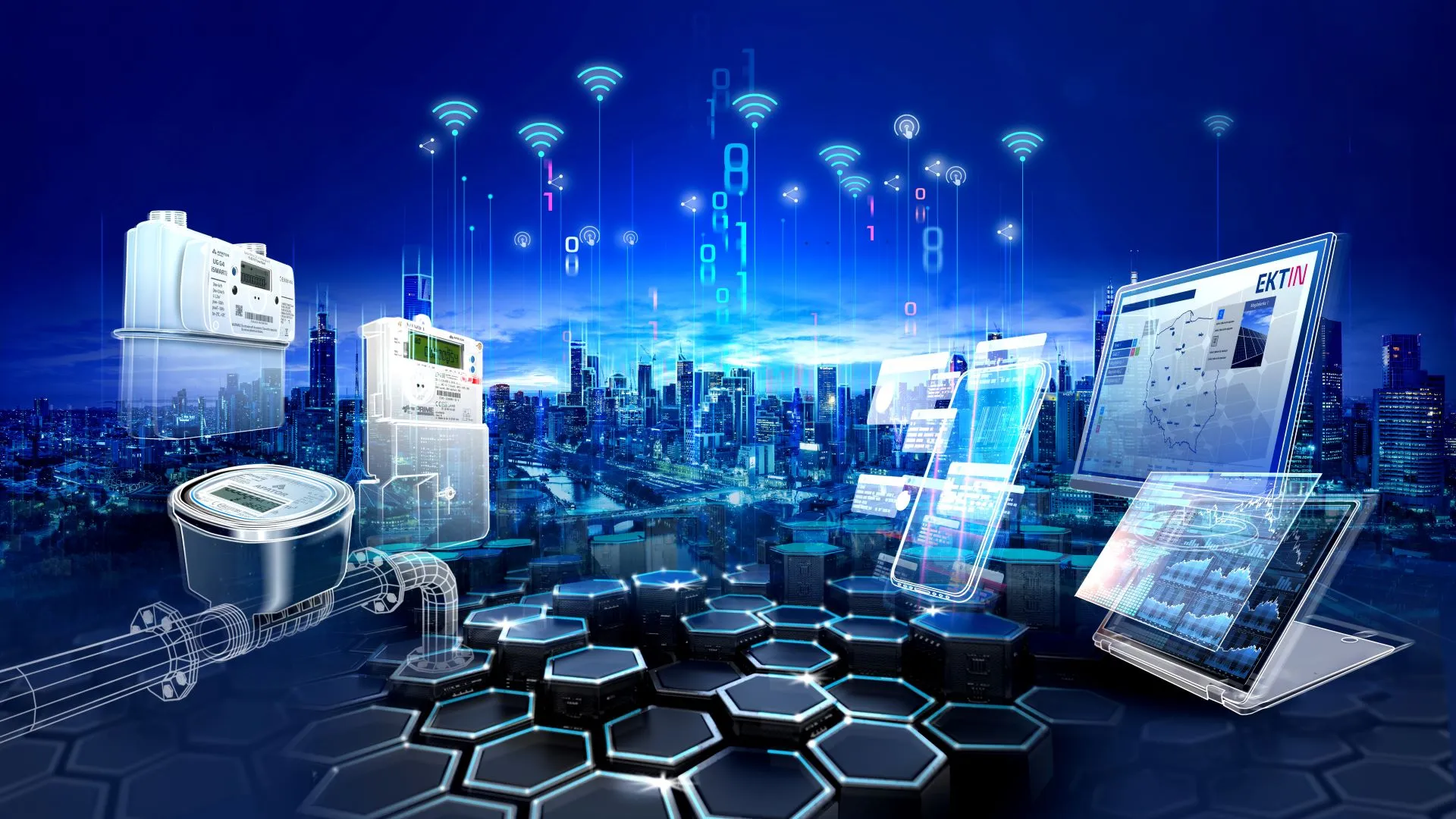
In an era of rising resource costs, climate change and societal expectations focused on sustainability, the precise management of utility consumption – electricity, water and gas – is becoming not just a necessity, but an absolute must. Both households and businesses are increasingly turning to modern tools that enable accurate monitoring and optimisation of resource consumption. At the heart of this transformation lie smart metering technologies and software supporting utility management. In the context of the development of smart cities, the integration of metering for all utilities is becoming the foundation of sustainable resource management and infrastructure planning.
Current metering solutions cover a wide spectrum of technologies – from traditional mechanical meters, through semi-automatic remote reading systems, to the increasingly common smart meters within AMI (Advanced Metering Infrastructure). The latter enable bidirectional communication between the meter and the network operator, allowing not only for remote data reading but also for the transmission of feedback, such as alerts about faults, dynamic tariffs or instructions to reduce consumption during peak hours. As a result, users gain greater control over their energy, water and gas consumption, whilst suppliers are provided with tools for more efficient and flexible network management.
New technologies and their share of the Polish market
Technological progress in recent years has significantly accelerated the development of smart metering systems. For example, in the energy market, according to data published in May 2025 by the Energy Regulatory Office (URE), by the end of 2024 over 7.3 million energy consumption points were equipped with remote-reading meters, representing 38.26 per cent of all end users. In the household sector, this figure stood at 6.11 million, translating to a coverage rate of 36.43 per cent. This exceeds the schedule for the roll-out of remote-reading meters set out in Polish energy law, under which this figure was to reach 35 per cent by the end of 2025. In the coming years, this figure is set to rise steadily until 4 July 2031, by which time 100 per cent of end users across Poland are to be equipped with smart meters enabling remote reading.
Unfortunately, the market for smart meters for water and gas is developing much more slowly. Data on the number of smart water meters in Poland is scattered and is not regularly published by a single central authority. It is estimated, however, that by the end of 2024, around 150–200,000 such devices had been installed in Poland, accounting for approximately 5 per cent of all water meters in the country. Meanwhile, reports on the implementation of the eGazomierz programme, run by Polska Spółka Gazownictwa, indicate that the number of smart gas meters has exceeded 500–700,000 units, giving a market share of around 10–15 per cent. The lack of automation in these segments, comparable to that in the energy market, limits the possibilities for data analyses, rapid fault detection and consumption optimisation. Users also lack real-time insight into their consumption, which makes it difficult to make informed consumer and environmental decisions.
Key integration of metering systems
Meanwhile, the integration of metering systems for all utilities is the key to achieving full energy and environmental efficiency. Apator is a company that fully understands this challenge. The Apator Group has many years of experience in the development of advanced solutions for electricity metering, water metering and gas metering, going far beyond traditional metering functions. The solutions offered by Apator integrate with analytical systems, enabling consumption forecasting,
automatic data reporting and real-time trend analyses. This enables users – both individual and institutional – to better plan resource consumption, identify potential inefficiencies and make data-driven decisions.
This is confirmed by the growing role of the comprehensive solutions offered by Apator. For example, in the energy sector, SCADA systems enable not only remote network monitoring but also the automation of key processes through advanced integration capabilities with applications used in electricity transmission and distribution systems. In combination with EMS (Energy Management System) modules, they allow for the optimisation of energy consumption based on precise measurement data. An example of such integration is the EKTIN solution, which supports the monitoring of individual or distributed photvoltaic farms and wind farms. It provides access to detailed information on the operation of the facility and allows for the control of its components. It also collects data on events, alarms and measured values, enabling effective management whilst reducing maintenance costs and ensuring safety.
Data as the basis for operational and strategic decisions
A similar approach has application in the water and heating sector. For example, Apator Powogaz’s SPIDAP system enables not only automatic data reading but also analyses – including the detection of anomalies such as leaks, unauthorised consumption or unusual consumption patterns. Through integration with network management systems, SPIDAP supports the efficient management of water and heat resources, as well as improving the quality of service for customers. The common thread running through these solutions is the use of measurement data as the basis for operational and strategic decision-making – at both the corporate and end-user levels. As a result, these solutions form the foundation for sustainable utilities management in cities and businesses, supporting the goals of the energy transition and the circular economy.
This is confirmed, among other things, by data from EU energy institutions for 2024. It shows that advanced IT systems – including analytics platforms, remote monitoring tools and predictive systems – can significantly improve network efficiency. Thanks to these, operators can analyse data from thousands of measurement points in real time, identify anomalies, predict overloads and optimise transmission. This results in a reduction in transmission losses, faster response to faults and more precise planning of infrastructure upgrades. As a result, grids become more flexible, resilient to disruptions and better prepared for integration with Renewable Energy Sources.
Benefits of investing in new systems
The implementation of smart metering systems involves initial costs – the purchase of equipment, installation and integration with IT systems. However, in the long term, this investment yields tangible benefits. Research conducted by the Electric Power Research Institute (EPRI) in 2024 shows that accurate metering can support more efficient energy use, which translates into a reduction in bills of up to 10–15 per cent. The key factor here is – as mentioned above – access to real-time data, which allows users to monitor consumption on an ongoing basis and identify areas where savings are possible. Changes are noticeable both in households (replacing or switching off unnecessary appliances, changing habits) and in businesses and industrial plants (investments in new installations and systems).
For businesses, smart metering is not only about financial savings but also a tool supporting ESG (Environmental, Social, Governance) reporting. Accurate data on resource consumption enables transparent reporting of environmental impact, which is increasingly required by investors and regulators. It also sends an important signal to consumers, who are becoming increasingly aware of the challenges associated
climate change. Furthermore, data from smart meters can be automatically integrated into ESG reporting systems, which significantly simplifies reporting processes. In the future, such solutions may become the standard in assessing corporate sustainability.
The future lies in digitalisation and AI
The roll-out of smart metering systems also presents challenges. One of these is ensuring the compatibility of new devices with existing infrastructure. In many cases, it is necessary to adapt IT systems, upgrade transmission networks or provide staff with training. Data security is also a crucial aspect. Smart meters generate vast amounts of information that must be adequately protected against unauthorised access. Cybersecurity is therefore becoming one of the key elements of smart metering implementation strategies. Attacks on metering infrastructure can have very serious consequences – both for individual users and for entire regions.
In this context, it is worth referring to the 2024 OECD report, which indicated that the future of the energy sector will increasingly be based on digital technologies and advanced data analytics. Smart metering will form the basis for the development of so-called smart grids, which will enable dynamic management of energy supply and demand. In turn, the development of artificial intelligence (AI), machine learning and the Internet of Things (IoT) will be key to the further automation and personalisation of services. This also applies to the water metering, gas metering and heat metering markets, where advanced analytics and AI-based systems will identify consumption patterns specific to individual customers, enabling personalised tariffs, better infrastructure planning and reduced wastage. Combined with digital management platforms, such as those offered by Apator, smart metering systems will therefore become not only a source of data and the key to increasing operational efficiency, but also an active component of resource management within a low-carbon economy.
Energy market regulations
Properly designed legal regulations and public policies will be a key factor in supporting the development of smart metering technology. For example, a 2024 report by the World Energy Council indicates that the roll-out of modern metering systems in the energy market could accelerate significantly if accompanied by clear technical standards, financial incentives (e.g. tax breaks and subsidies) and reporting obligations for operators and large energy consumers. Such an approach not only increases the scale of implementation but also ensures the consistency and interoperability of solutions across the entire system. Furthermore, a stable and predictable regulatory environment provides companies and local authorities with an incentive to invest in technologies that deliver environmental and economic benefits in the long term.
Regulations can also play a key role in ensuring data security, protecting user privacy and ensuring the transparency of energy systems. There is a growing call within the energy market for the creation of European and national legal frameworks for the management of metering data, which will support the development of innovative services. Legislative support could also include a requirement to install smart meters in new buildings, standards for communication between devices, or requirements regarding integration with Renewable Energy Sources. As a result, smart metering will become not only a technological innovation but an integral part of countries’ energy and climate policies.
Legislation for the water and gas market
Regulatory changes may also play a key role in the development of the smart metering market for water and gas, where the pace of implementing smart solutions is significantly slower than in the energy sector. In Poland, the requirement
to install remotely read meters currently applies mainly to water meters in multi-unit buildings – in accordance with the amendment to the Energy Efficiency Act, these are to be installed by 1 January 2027. However, the lack of a similar obligation for gas meters and the absence of uniform technical and interoperability standards limits the scale of implementation.
New legislative solutions are needed to accelerate the development of smart metering in these sectors. Firstly, it is worth introducing a requirement to install remote-read gas meters in households and industry, similar to the energy sector. Secondly, it is necessary to create a centralised system for managing metering data (modelled on the CSIRE for energy), which will ensure data security, transparency and accessibility for operators, consumers and regulators. Finally, regulations should clearly define the personal data processing rules for meters and ensure the protection of users’ privacy. Only a consistent and predictable legal environment can create the conditions for the widespread implementation of smart metering systems and the full exploitation of their potential based on integrated systems.
The foundation of sustainable resource management
Smart metering is not just a technology – today, it is above all the foundation of modern, sustainable resource management. In the coming years, smart metering will become the norm rather than the exception. Its development will impact many sectors of the economy – from energy and industry to public administration. That is why it is so important to invest today in modern solutions that will allow us to manage resources more effectively – to the benefit of the environment, the economy and ourselves. At the same time, we face challenges – technological, organisational and legislative. Ensuring data security, system compatibility and support from public policy will be key.
Let us remember that the integration of smart metering solutions is not just a matter of installing modern meters, but above all of building a coherent data management ecosystem. Software supporting utility management plays a key role here – both on the part of operators and end-users. What matters is not only the measurement itself, but also the ability to monitor, conduct analyses and utilise it in real time for decision-making processes. The systems offered by Apator demonstrate that access to real-time data enables not only the optimisation of consumption, but also faster response to faults, better infrastructure planning and increased operational efficiency. In the age of digitalisation and the energy transition, smart management of measurement data is therefore becoming the key to building a modern resource economy.