Discover the products that will help you manage your water consumption effectively
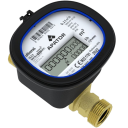
Choose the most accurate measurement of water consumption, down to a single drop, thanks to the unique W-Sonic ultrasonic application.
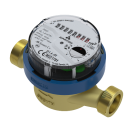
Choose reliable, simple-to-use water meters that are ideal for measuring water consumption in households.
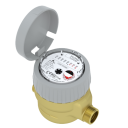
Invest in high-precision water meters featuring the best protection against external mechanical tampering and the ingress of contaminants.
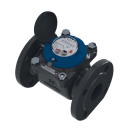
Effectively monitor the consumption of large volumes of cold and hot water in residential buildings and public facilities.
Choose water meters designed to measure a wide range of water flow rates in public facilities, industrial plants or systems with hydrant connections.

Accurately measure the volume of water abstracted from rivers and reservoirs, and monitor the discharge of treated effluent from sewage treatment plants.
Choose solutions for remote data reading and fair billing for customers

New additions to our range
Ultrimis NEO
A new-generation ultrasonic water meter designed for maximum measurement accuracy and reliable operation in demanding operating conditions.

Take advantage of innovative water consumption measurement solutions from the market leader
Frequently Asked Questions
A water meter is a measuring instrument designed to measure the volume of water flowing through closed pipes, under a pressure higher than the ambient pressure and operating with back pressure on the outlet side. The unit of measurement used in water meters is the cubic metre.
Each water meter consists of: a counting mechanism, a set of rings and a body.
On 30 October 2006, Directive 2004/22/EC of the European Parliament and of the Council of 31 March 2004 on measuring instruments came into force. This Directive covers 10 categories of measuring instruments, including water meters. This Directive is commonly referred to as ‘MID’, from the initial letters of its English name – Measuring Instruments Directive. MID implements a conformity assessment system replacing the existing system of legal metrological control in the field of type approval and initial verification. The MID Directive has fully replaced the GUM regulation.
The successor to the MID Directive 2004/22/EC is Directive 2014/32/EU of the European Parliament and of the Council of 26 February 2014 on the harmonisation of the laws of the Member States relating to the making available on the market of measuring instruments. This Directive sets out the requirements that measuring instruments must meet in connection with their placing on the market or putting into service for the purpose of performing measurement tasks.
Changes to flow designations:
- Q1 (previouslyQmin) – minimum flow rate – the lowest flow rate at which the water meters’ indications meet the requirements for maximum permissible errors.
- Q2 ( previouslyQt) – CT/VT flow rate – is the flow rate value between the continuous and minimum flow rates, at which the measuring range is divided into two intervals: upper and lower. Each interval has a characteristic maximum permissible error.
- Q3 (previouslyQp, formerlyQn) – continuous flow rate – the maximum flow rate at which the water meter operates correctly under normal conditions of use, i.e. under conditions of continuous or intermittent flow.
- Q4 (previouslyQp) – overload flow rate – is the maximum flow rate at which the water meters operate correctly for a short period of time without damage.
List of water meters by flow rates
Selection of water meter sizes from GUM to MID – whilst maintaining the same metrological range fromQ1 toQ4 in both cases:
| Water meter – nominal diameter DN [mm] | 15 | 15 | 15/20 | 20 | 25 | 25/30 | 40 | 40 | 50 | 65 | 80 | 100 |
| Qp(Qnom)[m³/h] according to PN-ISO 4064 (Legal metrological control – GUM) | 0.6 | 1 | 1.5 | 2.5 | 3.5 | 6 | 10 | 15 | 15 | 25 | 40 | 60 |
| Q3 [m³/h] according to PN-EN 14154 (Conformity assessment – MID) | 1 | 1.6 | 2.5 | 4 | 6.3 | 10 | 16 | 25 | 25 | 40 | 63 | 100 |
When selecting a water meter, the most important factors to consider are the size of the flow, the type of meter, the expected R-value, the temperature class, the installation location, and any other requirements (such as the method of remote communication) specified by the user.
Temperature class (preceded by the letter "T" in the markings): the minimum and maximum permissible water temperatures that the water meters should be able to withstand continuously at a specified internal pressure, without any deterioration in their metrological performance.
This is the range of measurement loads for which the water meters’ readings fall within the permissible error limits.
This is a water meter class indicating the maximum pressure drop at a constant flow rate caused by the presence of the water meters in the pipeline, expressed in kPa, and preceded by the letters "ΔP" in the specifications.
To prevent damage to the water meter caused by low temperatures, the water meter should be operated at an ambient temperature of 5–55°C, with a minimum measured water temperature of 0.1°C.
Depending on the temperature class of the water meters, the water temperature range for cold water can be divided into:
a) T30 – from 0.1°C to 30°C
b) T50 – from 30°C to 50°C,
or for hot water meters:
a) T90 – from 0.1°C to 90°C,
b) T130 – from 0.1°C to 130°C,
c) T30/130 – from 30°C to 130°C;
When selecting a water meter, particular attention must be paid to the temperature at which the meter will operate. If a water meter is applied for a purpose other than that for which it is intended, it may be damaged.
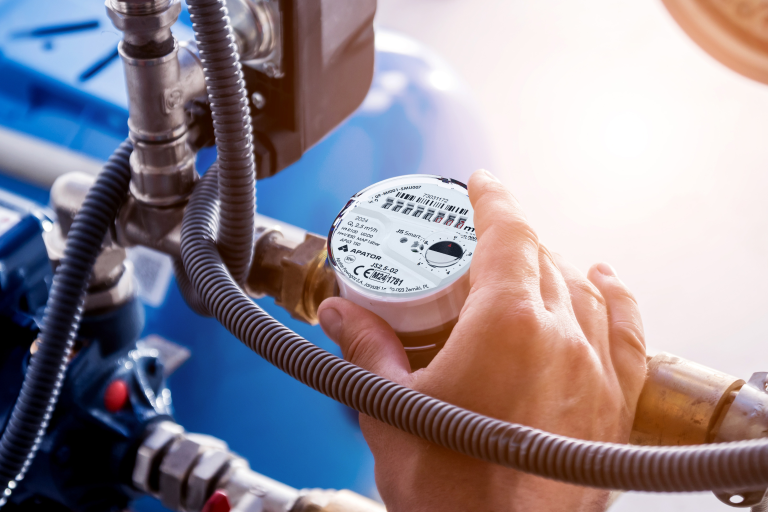
In accordance with the Regulation of the Minister for Economic Affairs of 23 October 2007 on the requirements to be met by water meters and the detailed scope of checks carried out during the statutory metrological inspection of these measuring instruments, the following markings must be affixed to the water meter in a permanent and legible manner, either separately or in a single location:
- the manufacturer’s name or mark;
- the conformity marking, within the meaning of Article 5(3) of the Act of 30 August 2002 on the conformity assessment system (Journal of Laws of 2004, No. 204, item 2087, as amended4), an additional metrological marking and the number of the notified body;
- manufacturer’s mark;
- year of manufacture;
- serial number;
- one or two arrows indicating the direction of flow;
- unit of measurement "m³";
- maximum permissible pressure, if different from 1 MPa (10 bar);
- where the water meters can operate only in a vertical position – the letter "V", and where in a horizontal position – "H";
- numerical value of the continuous volume flow;
- the ratio Q3/Q1, preceded by the letter "R";
- the ratio Q2/Q1, if different from 1.6;
- temperature class, if different from T30;
- pressure loss class, if different from ΔP 63;
- output signal to auxiliary devices, if any;
- the number of the EC type-examination certificate or EC design-examination certificate referred to in the provisions of the Act of 30 August 2002 on the conformity assessment system.
The reading can be taken manually by visually inspecting the water meter dial, or using remote reading modules.
The arrow marked on the water meter body clearly indicates the required direction of flow, for which measurement errors were checked during the conformity assessment. Installation contrary to the flow direction marking will not damage the water meter; however, the meter’s readings may differ from those of a water meter installed in accordance with the direction indicated by the arrow on the body.
In accordance with the Announcement of the Marshal of the Sejm of the Republic of Poland of 7 June 2016 on the Act – Law on Measures (Journal of Laws 2016, item 884) and the Regulation of the Minister of Entrepreneurship and Technology of 22 March 2019 on the legal metrological control of measuring instruments (Journal of Laws, item 759), it is stated that a measuring instrument should be submitted for recalibration before the expiry of the validity period (as specified in the regulations issued pursuant to Article 9(4)) from the date of conformity assessment. For water meters, this period is 5 years. Paragraph 2(2) states that the verification period runs from the first day of December of the year indicated on the instrument at the time of the conformity assessment and ends on 30 November of the fifth year. Information on the year in which the conformity assessment was carried out is included in the metrological marking on the measuring instrument (a capital letter ‘M’ and the last two digits of the year).
In accordance with the Regulation of the Minister of Entrepreneurship and Technology of 22 March 2019 on the legal metrological inspection of measuring instruments (Journal of Laws, item 759), the deadline for submitting a water meter that has undergone secondary recalibration (legal metrological inspection) for recalibration is indicated by a monthly mark with a Roman numeral denoting the month of issue/expiry of the certification, and an annual mark with symmetrically placed Arabic numerals denoting the last two digits of the year of validity. If the certification expires, the water meters may not be used as a basis for billing.
The minimum permissible pressure (mAP) on the outlet side at the water meter outlet should be 30 kPa (0.3 bar).
This is a parameter defining the metrological (measuring) range of the water meter. It is expressed as the ratio of the continuous flow rate Q3 (continuous volume flow – the highest flow rate at which the water meters operate correctly under normal conditions of use) to the minimum volume flow Q1 (minimum volume flow – the volume flow at which the readings fall within the permissible metrological errors). Thus, the higher the value of the R coefficient, the wider the range over which the water meters measure the volume of flowing water. As can be seen from the above, increasing the R coefficient can be achieved by increasing Q3 or by decreasing Q1. Furthermore, the lower Q1 is, the greater the sensitivity of the water meters.
The location for the water meter should be easily accessible for installation, removal and maintenance, convenient for reading, and separate from utility rooms. It must be protected from adverse weather conditions and shielded from the effects of electrical and gas installations. Valves should be fitted upstream and downstream of the water meters to shut off the water supply should it be necessary to remove the meters for replacements, inspections or repairs; valves capable of fully exposing the cross-section of the water supply pipe must be used. The accuracy of the water meter’s readings may be affected by flow disturbances occurring upstream or (to a lesser extent) downstream of the water meter, caused in particular by the presence of flow-disturbing fittings such as elbows, valves, filters, pumps, etc. It is recommended that the water supply system be fitted with straight pipe sections of sufficient length before and after the water meters to minimise the impact of flow disturbances on the measurement performed by the water meters.
The degree of protection (IP rating) is a numerical measure defined in EN 60529:2003. The IP rating is a parameter that characterises a device’s enclosure, indicating the level of protection it provides against the ingress of foreign solid objects and water. The degree of protection of a water meter’s dial determines the suitability of a particular type and model of water meter for specific environmental conditions. A fogged-up water meter ‘dial’ may therefore indicate that the device has been incorrectly selected for the environmental conditions in which it operates.
A water meter showing external signs of damage and/or a broken seal must be reported to the property manager immediately so that appropriate action can be taken. In the event of a damaged water meter or a broken seal, you must first inform the property manager and agree on the terms of replacement. You should then choose one of the options – repairing the water meter or purchasing a new one. If you choose the first option, you must remove the water meter and replace it with a water meter, a straight pipe or another fitting, and then send the damaged water meter to a unit specialising in repairs and secondary verification. Once the water meter has undergone secondary verification, it must be installed, and the power supply connection must be secured against unauthorised access in accordance with the administrator’s guidelines. In the case of the second option, a new water meter must be installed, securing the power supply connection as described above, and the replaced water meter must be sent for recycling.
All Apator Powogaz water meters in the standard version are designed for remote reading via communication adapters. The special NK or NKOP versions are designed for cooperation with reed switch transmitters (NK) or optoelectronic transmitters (NO).
Yes. Neither wireless nor wired remote reading poses a health risk. This is confirmed by the declarations of conformity issued for radio communication modules by the manufacturer in accordance with specific European Directives and harmonised standards.
The primary legal instrument is DIRECTIVE 2014/32/EU OF THE EUROPEAN PARLIAMENT AND OF THE COUNCIL of 26 February 2014 on the harmonisation of the laws of the Member States relating to the making available on the market of measuring instruments. Article 1 of this Directive sets out the requirements that measuring instruments must meet in connection with their placing on the market or putting into service for the purpose of performing measurement tasks. The following harmonised standards apply in conjunction with the Directive: EN 14154-1;-2;-3:2005+A2:2011; EN ISO 4064-1;-5:2014; OIML R 49-1; WELMEC Guide 11.1; 3.


Choose smart technologies for measuring water consumption
Check out our ready-made solutions or ask about customisation options
What should you look out for when choosing water meters?
Choosing the right water meter is a decision that affects the efficiency of water consumption management, the accuracy of billing and the costs of maintaining the system. There are many devices on the market that you can adapt to the specific needs of your business. Here are a few aspects you should take into account:
- type of water meter – consider whether you need a mechanical or an ultrasonic water meter. Both types offer precise water consumption readings, but differ in terms of measurement method, resistance to contamination and design;
- metrological class – the higher the class, the more accurate the measurement. Our ultrasonic water meters achieve an accuracy of up to R2000, which guarantees precise data readings even at minimal flow rates;
- temperature resistance – each water meter has a specific temperature class, which indicates the minimum and maximum water temperatures at which it can operate reliably. For example, if you wish to measure both cold and hot water consumption, you can use a vane-wheel water meter (e.g. JS SMART+). However, if you need to measure both cold and hot water simultaneously (up to 130°C), invest in a Woltman propeller (Woltman) water meter.
Advantages of high-quality water meters
A good water meter should not only comply with applicable standards and regulations, but also bring benefits to your business and the end user. High-quality water meters guarantee measurement accuracy, reliability and trouble-free operation for many years. The main advantages also include:
- fair billing – a high measurement class (e.g. R800) means that the water meter can record even a single drop of water. This eliminates underestimation of consumption and prevents financial losses;
- low operating costs – water meters made from robust and durable materials offer high resistance to external conditions, which minimises the need for frequent replacements and reduces maintenance costs;
- support for smart systems – modern water meters are often equipped with remote reading systems and can be integrated with external management systems (e.g. SPIDAP or AMR). This allows you to monitor consumption in real time and respond quickly to anomalies.
By investing in high-quality water meters, you are prioritising cost optimisation, accurate readings and maximum efficiency.