
Grid automation and SAIDI/SAIFI reliability improvement
Improve the reliability of your power infrastructure through smart automation and state-of-the-art control systems
Minimise the risk of power outages and gain full control over your network
Our solutions enable you to reduce the time taken to locate faults, minimise the likelihood of outages, and restore the power supply in a controlled and repeatable manner. The use of control algorithms and reliable measurement data allows the most critical operations to be carried out without the need for manual supervision by a dispatcher.
By using automation, you can, among other things:
reduce response times to faults through automatic fault location and isolation
limit the number of customers affected by the outage through rapid and controlled network switching
stabilise network operation under varying loads through continuous monitoring of parameters
minimise the number of field operations – some of the switching operations are automated
gain a complete history of events and operations, which facilitates analyses, documentation and modernisation planning
make better use of existing infrastructure through automatic load balancing and network configuration optimisation
For whom is network automation essential?

Automation enables the efficient location of faults, the isolation of damaged sections and the reconfiguration of the network, thereby reducing the duration of power cuts and easing the workload on dispatchers. It facilitates the monitoring of the MV network, provides a complete history of switching operations and allows for better utilisation of existing infrastructure as the number of distributed generation sources grows.

Automation solutions help maintain uninterrupted power supply in industrial plants, logistics centres and municipal facilities, where even brief power outages result in significant losses. These systems respond to overloads, monitor network configuration and facilitate the rapid restoration of power to internal circuits.

Network automation reduces the number of manual operations and minimises the need for on-site intervention. Clear information on the network status, recent switching events and the reasons for protection trips facilitates work organisation, diagnostics and the planning of operational activities.
Find out how our network automation systems work
Network automation encompasses systems that monitor infrastructure parameters and perform switching operations in accordance with pre-programmed rules. These solutions analyse measurement data in real time, detect faults and select the appropriate sequence of actions for a given network configuration. This ensures that control processes are executed in a consistent and repeatable manner, whilst maintaining full protection logic.



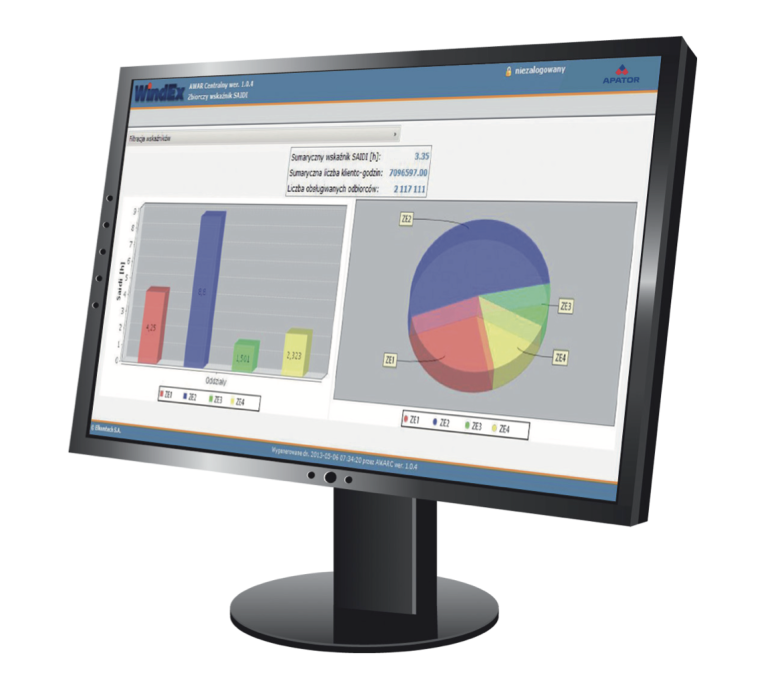
- FDIR handles fault detection and isolation;
- ARS automates reclosing;
- ABS regulates loads and monitors line operation;
- EMA is responsible for network status analyses and event interpretation;
- AWA enables verification of the correct operation of automation and control sequences;
- MGO is responsible for coordinating distributed energy resources and optimising their cooperation with the distribution network.
Streamline network management with integrated automation systems
Ensure maximum operational reliability and optimise your SAIDI/SAIFI metrics
Download materials
Discover our range of products designed for network automation
Network security and automation
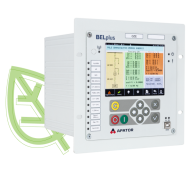
BELplus
Universal digital protection for MV switchgear
A comprehensive range of current, voltage and earth-fault protection devices
Integration with SCADA systems and support for the IEC 61850 standard
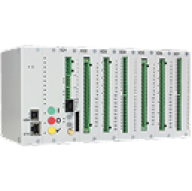
microBEL SRS
Operation of MV overhead switchgear/disconnectors
Earth fault and phase-to-phase fault detection functions
Remote diagnostics of an uninterruptible power supply
microBEL SX
Control of MV substations and cable joints
Detection of earth faults and phase-to-phase faults, and implementation of protective functions
Support for local connectors, remote diagnostics and numerous communication ports
Solutions for renewables and distributed generation
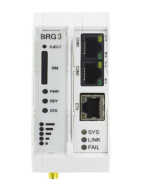
BRG 3
Control and monitoring of distributed generation sources
Support for standard communication protocols (Modbus, IEC, DNP3)
Flexible configuration and integration with host systems
Frequently Asked Questions
No, the FDIR solution is automation that operates on the basis of dynamic network status analyses. The system continuously analyses the network configuration and prepares an appropriate sequence of switching operations. This sequence can be influenced by a number of factors, such as taking into account the dispatcher’s instructions, as well as excluding switches that are faulty or currently lacking connectivity.
Yes, FDIR operates completely independently. The user can enable step-by-step application on demand. In this case, the dispatcher confirms each subsequent switching operation. This mode of operation is mainly used during production testing. The system allows the algorithm to be tested safely in a test environment.
The windEX system can accommodate various FDIR automations monitoring multiple lines. The latest version of the solution takes into account the operations of neighbouring automations and prevents faults from escalating.
No, the latest version of the FDIR automation system can operate on a network that is not in normal operation. Monitored lines can be shortened by splitting them, or extended by closing the split and connecting a section or the entire length of another line.

Improve network reliability with automation tailored to operating conditions
Reduce response times to disruptions, improve infrastructure stability and gain full control over your network